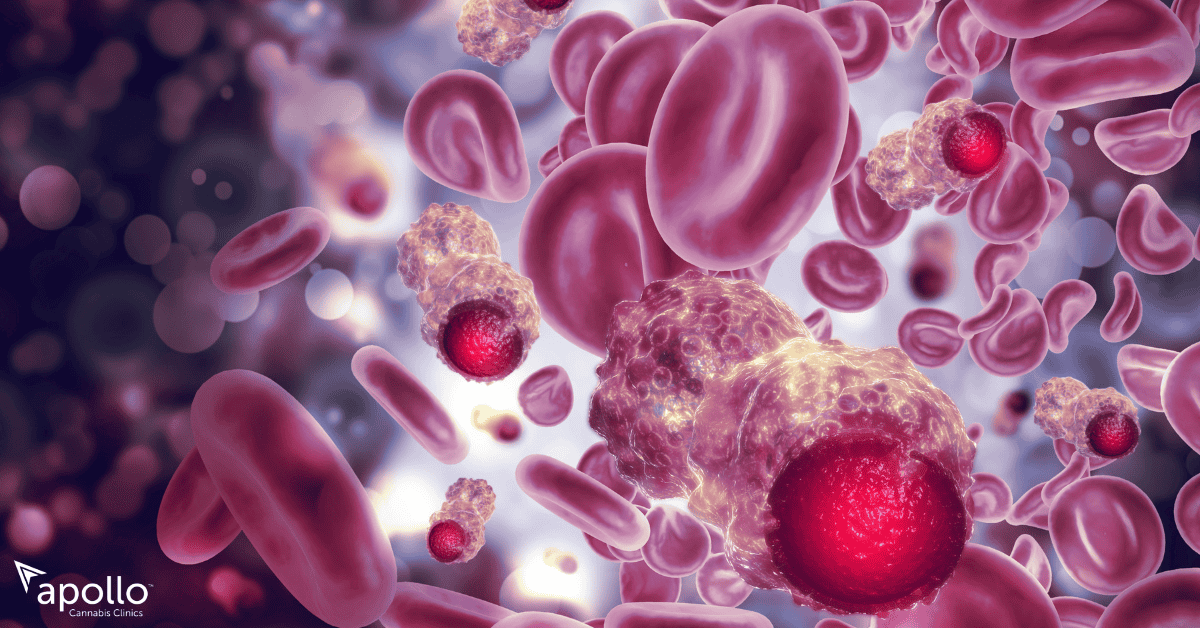
How To Manage CLL Cancer Symptoms with Medical Marijuana
What is CLL Cancer? Chronic Lymphocytic Leukemia (CLL) is a type of blood cancer that affects the bone marrow and lymphatic system. It’s a slow-progressing

If You Are:
If You Are:
A guide to medical cannabis use for ALS in Canada: safety, effects, and access

Living with Amyotrophic Lateral Sclerosis (ALS), also known as Lou Gehrig’s disease or Motor Neuron Disease, presents profound challenges for patients and their caregivers. As a progressive neurodegenerative disease that affects motor neurons, ALS leads to gradual loss of muscle control, significantly impacting quality of life and independence for approximately 3,000 Canadians currently living with the condition.
ALS progresses differently in each person, but the core experience involves the degeneration of motor neurons, leading to muscle weakness, atrophy, and eventually affecting the ability to move, speak, eat, and breathe. With limited treatment options available, many patients and caregivers seek complementary approaches to manage symptoms and improve quality of life.
Some common challenges faced by people with ALS include:
Traditional treatments typically involve riluzole and edaravone (medications that may slow disease progression), along with multidisciplinary supportive care focusing on symptom management. However, these approaches provide limited benefits, and many symptoms remain inadequately controlled. This reality has led many ALS patients and their healthcare providers to explore alternative options, including medical cannabis.
Research into cannabis for ALS is growing, with promising preclinical evidence and clinical observations. Studies in ALS models suggest cannabinoids may offer neuroprotective, anti-inflammatory, and symptom-relieving properties that could benefit those with ALS.
The potential effectiveness of cannabis for ALS may be linked to how it interacts with the endocannabinoid system, which plays roles in neuroinflammation, excitotoxicity, and muscle control—all relevant to ALS pathophysiology.
Here’s how cannabis may help:
This multifaceted interaction between cannabis compounds and biological systems affected by ALS might explain why many patients report benefits across several symptom domains, often with fewer side effects than some conventional medications.
It’s important to note that while preclinical evidence is promising, large clinical trials specific to ALS are still needed. Individual responses vary, and cannabis should be used under proper medical guidance as part of a comprehensive care plan.
For Canadians living with ALS, medical cannabis may offer several potential benefits:
Many patients report improvements in various ALS-related symptoms, including:
Others find cannabis helpful for broader quality of life concerns:
| Traditional ALS Treatment Concerns | Potential Cannabis Benefits |
| Multiple medications needed for different symptoms | May address several symptoms with a single approach |
| Side effects from conventional medications | Potentially different or more tolerable side effect profile |
| Limited options for symptom control | Alternative pathway for relief |
| Focus primarily on physical symptoms | Potential to address both physical and psychological aspects |
While not everyone experiences these benefits, and cannabis is not a cure for ALS, many patients report meaningful improvements in comfort and quality of life when incorporating medical cannabis into their treatment plan under proper medical supervision.
Medical cannabis comes in various forms, each with different onset times, durations, and potential benefits for ALS symptom management. Finding the right option depends on your specific symptoms, disease stage, and practical considerations, including dexterity and swallowing ability.
Many ALS patients find that a combination approach works best – perhaps using a longer-acting oil for baseline symptom management with a faster-acting option for breakthrough symptoms.
Your healthcare provider can help determine which forms might work best based on your specific symptoms, disease stage, functional abilities, and caregiver support.
If you’re considering medical cannabis for ALS in Canada, here’s how to begin the process:
To determine if medical cannabis may be appropriate for your situation:
Our streamlined process makes it easy:
If approved, you’ll receive:
Our care doesn’t end with your prescription:
Starting medical cannabis treatment for ALS is a significant decision that should be integrated with your overall care plan. Our team of healthcare professionals specializes in cannabis medicine and can help you navigate this process safely and effectively through online prescription services across Canada.
An important consideration for anyone with ALS is how medical cannabis might interact with other medications you may be taking as part of your treatment plan.
These interactions could affect how your medications work or potentially cause unwanted effects.
For your safety, always:
A comprehensive consultation with a healthcare provider experienced in both neurodegenerative conditions and cannabis medicine is essential to ensure your treatment plan considers all aspects of your ALS care, providing the best opportunity for safe and effective symptom management with your online prescription.
Finding the right cannabis approach for ALS requires careful, individualized guidance that considers disease stage, symptom profile, and practical factors. While we recommend consulting with a healthcare professional for personalized advice, here are some general principles:
These general guidelines must be tailored to your specific ALS symptoms and stage by a healthcare provider during your online consultation.
Remember that cannabis affects everyone differently, and patients with neurodegenerative conditions may have unique response patterns. Working with healthcare providers experienced in both ALS and cannabis medicine can significantly improve your results when getting an online prescription in Canada.
Find everything you need to know about being a medical cannabis patient below.
Yes, medical cannabis is legal in Canada with a valid prescription. ALS is typically considered a qualifying condition due to the significant symptom burden and limited conventional treatment options. Many ALS clinics now incorporate cannabis options into their comprehensive care approaches.
While some preclinical research suggests cannabinoids may have neuroprotective properties that could theoretically influence disease progression, current clinical evidence is insufficient to make definitive claims. The primary focus of cannabis treatment in ALS remains symptom management and quality of life improvement. Research is ongoing in this area.
Some private insurers now offer coverage for medical cannabis, particularly for conditions like ALS where evidence supports symptom management benefits. Coverage varies widely, so check with your insurance provider about specific policies. Many patients also qualify for medical cannabis expenses as tax deductions. Additionally, some ALS societies offer financial assistance programs that may help with costs.
Yes, many patients use medical cannabis alongside standard ALS medications. While no significant interactions have been widely reported between cannabis and riluzole or edaravone, careful monitoring is always recommended when combining treatments. Always inform your healthcare provider about all medications you’re taking to ensure safe treatment.
Cannabis may indirectly help with these symptoms by reducing excessive saliva production and relaxing throat muscles in some patients. However, it’s important to note that cannabis cannot restore lost function. For swallowing difficulties, cannabis oils can be administered under the tongue or mixed with food, bypassing the need to swallow pills.
Medical cannabis prescriptions in Canada typically need renewal every 3-6 months, depending on your healthcare provider’s recommendation and your disease progression. Regular follow-ups help ensure the treatment remains appropriate as your condition changes. Many providers offer virtual renewals to accommodate mobility limitations.
Yes, many palliative care specialists incorporate cannabis into late-stage ALS care for symptom relief. At this stage, the focus shifts to comfort, with cannabis potentially helping manage pain, breathlessness, anxiety, and improving quality of life. Administration methods may need to be adapted, with caregivers typically managing dosing.
Many ALS specialists are now familiar with medical cannabis as an adjunct treatment. Consider these approaches:
Not everyone responds the same way to medical cannabis. If you don’t experience benefits after a reasonable trial period or have unwanted side effects, your healthcare provider can help adjust your approach or explore other treatment options. The goal is to find what works best for your specific situation.
Yes, caregivers can legally administer prescribed medical cannabis to ALS patients in Canada. Many product forms are specifically designed for caregiver administration, such as oils with measured droppers, sprays, and capsules. Your healthcare provider can offer training and guidance for caregivers on proper administration techniques.
This is an important consideration, as respiratory compromise is common in ALS. Inhaled forms of cannabis (smoking or vaporizing) should generally be avoided by patients with respiratory weakness. Instead, oils, tinctures, capsules, or sprays are preferred. THC in appropriate doses may actually help some patients by reducing the sensation of breathlessness, though this should be carefully monitored. Patients using BiPAP or ventilatory support can still use non-inhaled forms of cannabis.
What is CLL Cancer? Chronic Lymphocytic Leukemia (CLL) is a type of blood cancer that affects the bone marrow and lymphatic system. It’s a slow-progressing

Panic attacks are sudden episodes of intense discomfort or fear, typically ranging from 3-30 minutes. They are characterized by intense and often overlapping physical and

“We have demonstrated that regulated medical cannabis products can be incorporated into the care of cancer patients safely and effectively. After three months, the patients